Module 2: Artwork Analysis
Module 2: Artwork Analysis

The above image is a photograph of a portrait "Whistlejacket" a racehorse painted by George Stubbs, an English artist. Stubbs was commissioned to paint this portrait in 1762 by the Marquess of Rockingham. It is now shown in The National Gallery in London, England. Below is the link to The National Gallery website and their insight on this portrait: https://www.nationalgallery.org.uk/paintings/george-stubbs-whistlejacket
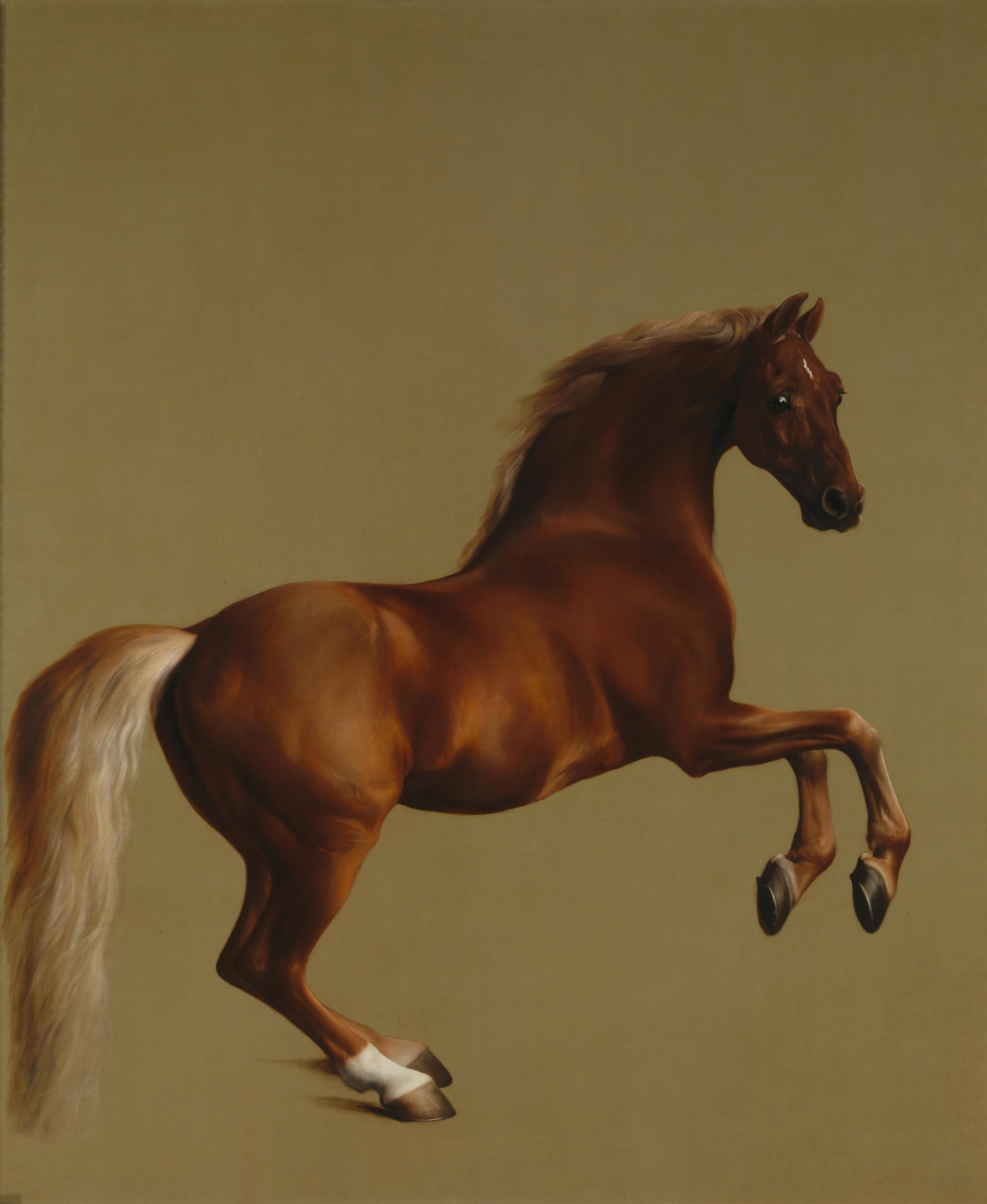
Although, essentially, this is just an oil painting of a horse it still sparks the interest of many people; horse lovers or not. This is down to how realistic this portrait looks; the way Stubbs has captured the light on the fur and the shadows created by Whistlejacket's muscles make it look like a photograph. I believe the medium chosen for this portrait also helps Stubbs capture the realistic fur look, oil paintings can be manipulated to add texture by being thicker in certain places; this could help achieve more 3D hairs to help add depth to the horse's flaxen mane and tail. Stubbs also made sure to capture all of the Chestnut stallion's markings, his white sock on his back-right foot and the thin white blaze between his eyes. This helps Stubbs portray the character of Whistlejacket, it's a specific and real horse and this helps people connect with the painting and believe it is a real horse.
Something interesting about how this portrait is painted is that from afar, and in these photographs, it is extremely realistic however if you see the painting in person and look closely at Whistlejacket's flank (the middle of his body, rib area) Stubbs used very loose strokes and a blown up picture of this area would actually look very abstract. The same can be said for the edges defining Whistlejacket's body, they're blurred, and it makes the painting dynamic by making Whistlejacket look as if he is moving. Motion is also a realistic concept, we all move, so really the blurry lines and imprecision adds to the realism of the portrait.
Another unusual concept, for equine portraits, is that Whistlejacket can be seen in a blank space and I personally think that Whistlejacket is aligned more to the left and to the bottom of the canvas rather than being placed in the middle. The way Stubbs skews Whistlejacket on the canvas adds to the real representation he is striving for. It does this by implying the idea of motion; if the horse is on the left and facing the right your brain presumes that the horse is probably moving to the right and it make it seem more realistic. Even though Whistlejacket is not centred in the middle of the painting I don't think this affects the balance of the portrait, I think this is because there is no background and Whistlejacket is the main subject. The immense size of this portrait (can be seen next to a person in the first picture) is very rare for equine portraits and I think this helps add to the mystery of the importance of Whistlejacket who in fact wasn't that successful as a racehorse. I also believe this heroic scale adds again to the realness of the portrait and actually makes the movement seem more plausible.
Bibliography:
Morgan, Matthew, "George Stubbs: portrait of the horse Whistlejacket." The National Gallery insight video, April 13, 2017. https://www.nationalgallery.org.uk/paintings/george-stubbs-whistlejacket


This painting is exceptionally beautiful to look at, and I love horses, so I am very drawn to it. I love how rich looking the colors are and how you can see the muscle tone throughout the horse. It’s so realistic looking and amazing that this is an oil painting. I’ve never seen this painting before or was even aware it existed. I think you picked a great piece of artwork to share.
ReplyDeleteThis is a great house painting! side note my favorite animal. I liked your usage of words to describe the art such as abstract, depth. While reading this I noticed that you repeatedly talked about the realness of the picture. while that is a great point I think you should leave that in one paragraph either the first or last. Although true I felt as if that was the main point and repetitive. Other than that great job, spelling and grammar were on point.
ReplyDeleteI love how realistic the painting does look and how you went into detail about how the painting was made and the different techniques that were used and could've been used. And you're usage of words you used to describe the piece of art in order to give the readers a new perspective. And the picture is beautiful.
ReplyDeleteI think that making a painting realistic or very hard to do, because if one thing is off, such as the lighting or the color of one little thing, will ruin the whole picture, so I like how you brought that up. Something to question is how hard is it to paint something in motion like the horse standing up? its easy to paint something that never moves like a bowl of fruit because you can look at it forever and nothing changes, but capturing something in motion, where that one pose happens just for a second, must be very difficult.
ReplyDelete